Health Is Vital

Health is taken for granted, until you can't any more. In this blog I hope to put down on paper some of the articles I come across and want to remember, about health. I will be personalizing these articles to apply to me. I am diabetic, over weight, have high blood pressure and tinnitus, so these are the things you will find here. I will include nutrition, exercise, and holistic health, and many other ideas. I work in the health profession, particularly mental health, and have an interest in suicide prevention; so these topics will also be covered in this blog. Please, if you are suffering reach out. Our county health and crisis line is 1-855-278-4204.
Showing posts with label American Foundation for Suicide Prevention. Show all posts

Sunday, May 27, 2018

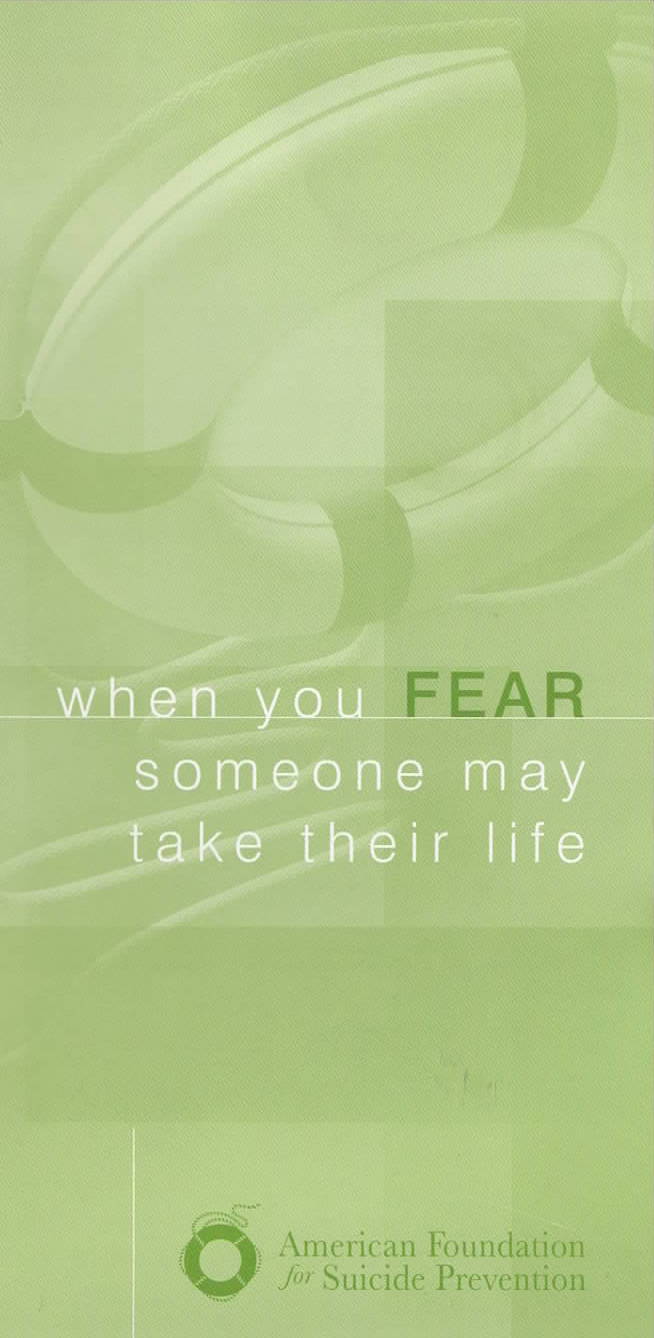
When You Fear Someone May Take Their Life


This pamphlet is from The American Foundation for Suicide Prevention.  It is not big on graphics and pictures, but very good on the information provided.
90 percent of people who commit suicide are suffering from a treatable mental disorder including: depression, bipolar depression, alcohol abuse or dependence, schizophrenia, post traumatic stress, drug abuse, eating disorder or personality disorder.  Most of these disorders are recognizable and treatable.  Another telling sign for suicide risk is past attempts.  Access to easy means is also a risk factor. 
Things that could signal risk for suicide include suicide threats or threats to hurt others, looking for means to commit suicide, talking or writing about death and suicide plans.  Other warning signs include withdrawing form family and friends, increased alcohol or substance use, engaging in violent behaviors and acting reckless. 
If someone mentions they are suicidal it should be taken seriously.  Be willing to listen.  If you see signs don't be afraid to ask if the person is considering suicide.  Don's try to argue the person out of suicide. 
Seek professional help.  Persons contemplating suicide sometimes don't think they can get help, but there is help available.  In an acute crisis do not leave the person alone, remove means for suicide--fire arms, pills, knives, etc.  Take the person to a crisis center, or lacking this to the nearest hospital.  9-1-1 is always an option; as are suicide prevention lines.  1-800-273-8255 is a national hotline.  Santa Clara County the hotline is 1-855-278-4204.
Persons with suicidal thoughts often hesitate to seek treatment.  You can support them in seeking treatment.  Also medications have side effects and you can help them through this.  It is also important to stick with treatment.  The first medication is not always the right medication.

Tuesday, August 23, 2016

Find a Suicide Walk in Your Area

Out of the Darkness Walks are coming to your area.  I have noted there is one in San Jose, and there is one in Modesto.  This is an effort to put light on suicide, and to raise money for suicide prevention efforts.  This walk is sponsored by the American Foundation for Suicide Prevention.   Even if you don't intend to walk, check out the website as it provides information on suicide and efforts to prevent suicide.  Suicide is the tenth leading cause of death in the United States, and fourth leading cause in adult 16-65. In 2014 there were over 40,000 reported completed suicides in the United States.  The website says that 90 percent of people who complete suicide have a diagnosable mental health problem.  It then goes on to say:
The best way to prevent suicide is through early detection, diagnosis, and treatment of depression and other mental health conditions.

Monday, September 7, 2015

Modesto Walk for Suicide Prevention:9/19/15

Walk in Modesto for Suicide Prevention

This walk is sponsored by the American foundation for the Prevention of Suicide.  People walk to raise awareness about suicide.  These walks are called "Out of the Darkness Walks."  This is the sixth annual walk in Modesto.  The Modesto walk has now only raised 40 percent of their goal.
I have taken a couple quotes from their website.

When you walk in the Out of the Darkness Walks, you join the effort with hundreds of thousands of people to raise awareness and funds that allow AFSP to invest in new research, create educational programs, advocate for public policy, and support survivors of suicide loss. 

Why We Walk


Every year suicide claims more lives than war, murder, and natural disasters combined, and yet suicide prevention doesn't get anywhere near the funding given to other leading causes of death. It's up to Walkers like us to make a difference. Together we can change the conversation about mental health and put a stop to this tragic loss of life.

Out of the Darkness Community Walks

The core of the Out of the Darkness Walks, the Community Walks are proof that when people work together, they can make big changes in our world. The walks raise awareness for suicide prevention as they raise the resources we need to carry out our mission. With nearly 200,000 people walking in 350 cities across the country, they are AFSP’s biggest fundraiser and the driver of the suicide prevention movement.

Wednesday, May 27, 2015

**Documentary Review: More than Sad

More Than Sad, American Foundation for Suicide Prevention, 2009.
This is a collection of two videos.  The first is a general awareness video More than Sad: (teen depression).  This presents four young people who have been going through depression and talks about their specific issues, and how they dealt with depression.  10 to 15 percent of youth will have depression during a school year.  However, most will not get treatment.  This video focuses on reducing stigma about treatment, giving examples of how treatment has helped others, and shows the results of the treatment.

The second video takes off where there first video left off: More than Sad: (Suicide Prevention).  It is more geared for teachers and how to recognize when someone needs help.  In addition to following the youth from the first video, this video also adds several testimonials from teachers who intervened with students who they recognized as needing help.  This video gives examples of when a teacher might intervene.  The teachers had positive results and some even later got thank-yous from the students.