Health Is Vital
Friday, September 4, 2026
Project Semi-colon: Suicide and Depression Awareness
Project semi colon as in ; and not what needs a colonoscopy. It is a program for helping people pause when they are depressed, before attempting suicide. "Whether you are trying to understand your own mental health, support someone you love, or help a child who is struggling, Project Semicolon helps you find a clear next step." It is a site with links to many articles dealing with depression and suicide from the perspective of yourself or a friend or a child.
Sunday, August 16, 2026
Magazine Article Review: What it Feels Like to Have OCD
What it Feels Like to Have OCD as told by Alyssa Shelasky, illustrations by SHOUT, Real Simple: Life Made Easier magazine, February/March 2026, pp 47-50.
A first person history with OCD helped me understand better how the compulsion heled to calme the thoughts. The individual who provides the story always had thoughts that someone might die if they did not do things, such as tap and count. She also had issues with closed doors and avoids elevators. She offers a good description, "It's almost like living with addiction: You spend a lot of time figuring out how to isolate and hide your habits without anyone knowing." She also offers a good piece of advice, "So much of Mental health is about finding the doctors and medications that are right for you." This individual was able to go ten years without medications, but then the thoughts started catching up with her again. Then she had to start treatment again. She says sometimes you have to avoid the thoughts by focusing on something else.
Monday, August 27, 2018
A Message from NAMI About Stigma
Monday, February 19, 2018
Tuesday, November 14, 2017
Trastorno Obsesivo Compulsive OCD (Spanish)


Hay ayudas por esta enfermedad. Lo mejor seria hacer contacto con el departamento de salud mental en el condado donde ud vive.
Sunday, June 4, 2017
Seven Statements that Hurt People with Anxiety; My Reaction
1. You have a lot to be grateful for.
2. You Should_____.
3. Everything will be OK.
4. Just be happy.
5. It's all in your head!
6. What do you have to be anxious about?
7. There are people with much bigger problems.
There is a great lesson here. As I read the statements, I am convinced I can do better around others. This article is a keeper and I suggest you clic on the link to read it.
Wednesday, May 10, 2017
Saturday, May 6, 2017
May is Mental Health Month from Rene Santiago
Friday, March 31, 2017
Pamphlet Notes: Obsessive Compulsive Disorder
Obsessive Compulsive Disorder is when someone has to recheck and recheck things. Not the once or twice which is normal, but over and over. It can include ritualistic behavior as well. Thoughts and actions associated with OCD get in the way of daily life and cause distress.
Signs and symptoms to look for:
Repeated thoughts about things, such as fear of germs, intruders etc.
Do the same rituals over and over.
Can't control unwanted thoughts.
Don't get pleasure form the rituals, but momentary relief.
Spend at leas one hour per day on the thoughts and rituals.
The cause of OCD is still not known however there is a genetic component.
OCD responds to both psychotherapy and medication. A preferred psychotherapy is cognitive behavioral therapy. CBT teaches someone how to control their thoughts. Antidepressants also are helpful when taking under a doctor's direction,
Lastly combined psychotherapy and medication are also useful.

Tuesday, March 28, 2017
Pamphlet Review: Depression

This is a pamphlet from the National Institute of Mental Health. It is a pamphlet for lay people, how to determine if they have depression and whether to get help. Signs of depression include feeling sad; feeling hopeless, anxious or guilt; loss of interest in favorite activities; feeling tired; not being able to concentrate; overeating or not wanting to eat; thoughts of suicide or attempts; aches, pains cramps, digestive issues.
Some of depression is genetically caused, but it also has an environmental component. Sometimes genes play a role in resilience, and ability to recover from hardship. Depression either causes, or is caused by subtle changes in the brain.
The first step for treatment of depression is to visit a doctor or mental health worker. Depression can respond to medications, psychotherapy or both.
For those in Santa Clara County on MediCal, the number to call for assistance is 1-800-704-0900
Tuesday, March 7, 2017
Living with Depression
This is a story of depression presented on the Mormon Channel. Depression has two components, physical and emotional. Often times, without first treated the physical causes of depression, it is very difficult for someone to make the needed changes to tackle the other issues. However, talk therapy is known to help with depression.
Saturday, January 7, 2017
Intensive Case Management Services for the Severely Mentally Ill
Summary: It is certain that severely mentally ill adults with high levels of need for services can be managed and treated most effectively using intensive case management programs. These programs clearly reduce the total direct care costs for clients over time and improve client functioning in the community as well. These findings indicate that expansion of these case management services will result in substantial savings to the County mental health system while improving client outcome.
The Mental Health Bureau has been evaluating the relative cost-effectiveness of three of its intensive case management programs which specifically target their services to adults who are severely and persistently mentally ill and are high users of the acute and subacute treatment services. These clients have two or more inpatient or skilled nursing facility episodes during the year prior to their entry into one of these three case management programs, as well as being noncompliant with previous outpatient services, being conserved and receiving SSI payments. the three case management programs are: Virginia Street Project, Community Companions, and Downtown Mental Health Center. Each program offers clients a different mix of outpatient, medication, case management, housing, and supportive day services, depending on their service philosophy and their caseload size.
Overall, the three intensive case management programs currently serving severely and persistently mentally ill adults are substantially reducing the direct service costs for these clients and improving their psychosocial functioning in the majority of clients served. Our data also indicate that these reductions in direct mental health service costs do not increase the burden on families or other social/criminal justice services. However, there are differences among the three programs in the degree to which they are lowering direct service costs and increasing client functioning. The relative cost-effectiveness of the three programs depends on which outcome (treatment cost reductions versus client improvement) is considered.
The most cost-effective service from both of these perspectives is the Virginia Street Project which is reducing the total cost of mental health services to its clients by about $14,000 per year, compared to the level of care they required prior to receiving this service. the greatest reduction is in the inpatient days and skilled nursing facility days of service used (see Figure 1).
They are also providing significantly more supportive outpatient and case management services to these clients (see Figure 2), but these services are offered at only a fraction of the cost of acute and subacute treatment facility costs. Client functioning is improving to the greatest extent among VSP clients as well (see Figure 3).
Clients served by Community Companions demonstrate the next greatest improvement (see Figure 3) in functioning, and their total treatment costs are reduced $5,000 per client per year, the first year they are provided intensive case management services. This outcome seems consonant with Companion's program philosophy which emphasizes client empowerment and rehabilitation as well as compliance with taking medications and explicit avoidance of hospitalization.
Downtown Mental Health Center clients showed reduced annual direct treatment costs of about $7,800, per client per year. Client functioning improved less in the first year than for the other two programs, although Downtown MHC clients demonstrated the same pattern of overall change as the clients in VSP or Companions (Figure 3). These outcomes seem consistent with the program's emphasis on maintaining clients in the community by providing supportive outpatient counseling and medications and with staff caseloads being twice the size of those at VSP or Community Companions during this study.
Tuesday, January 3, 2017
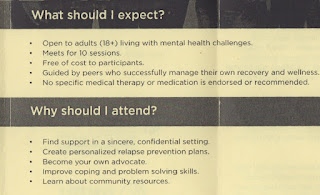
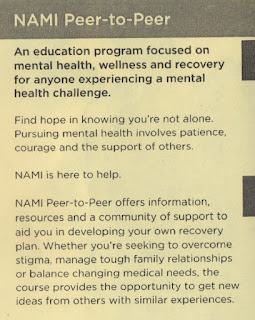
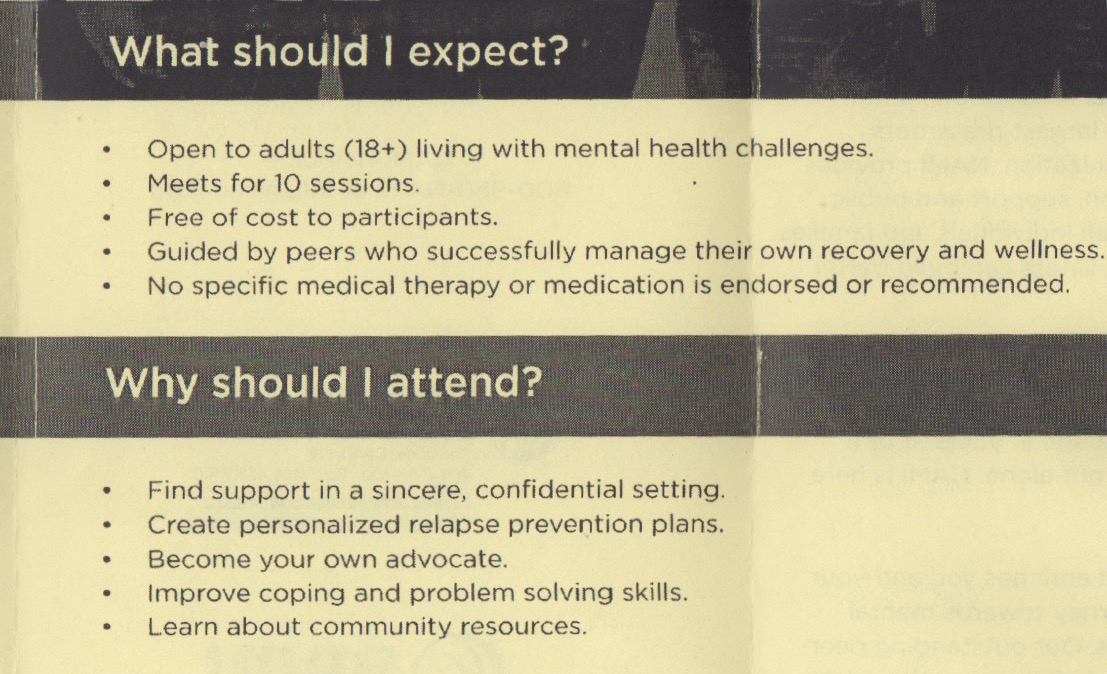
NAMI: Peer to Peer
Sunday, December 25, 2016
Mental Health Advocacy Project: Santa Clara County
Sunday, December 18, 2016
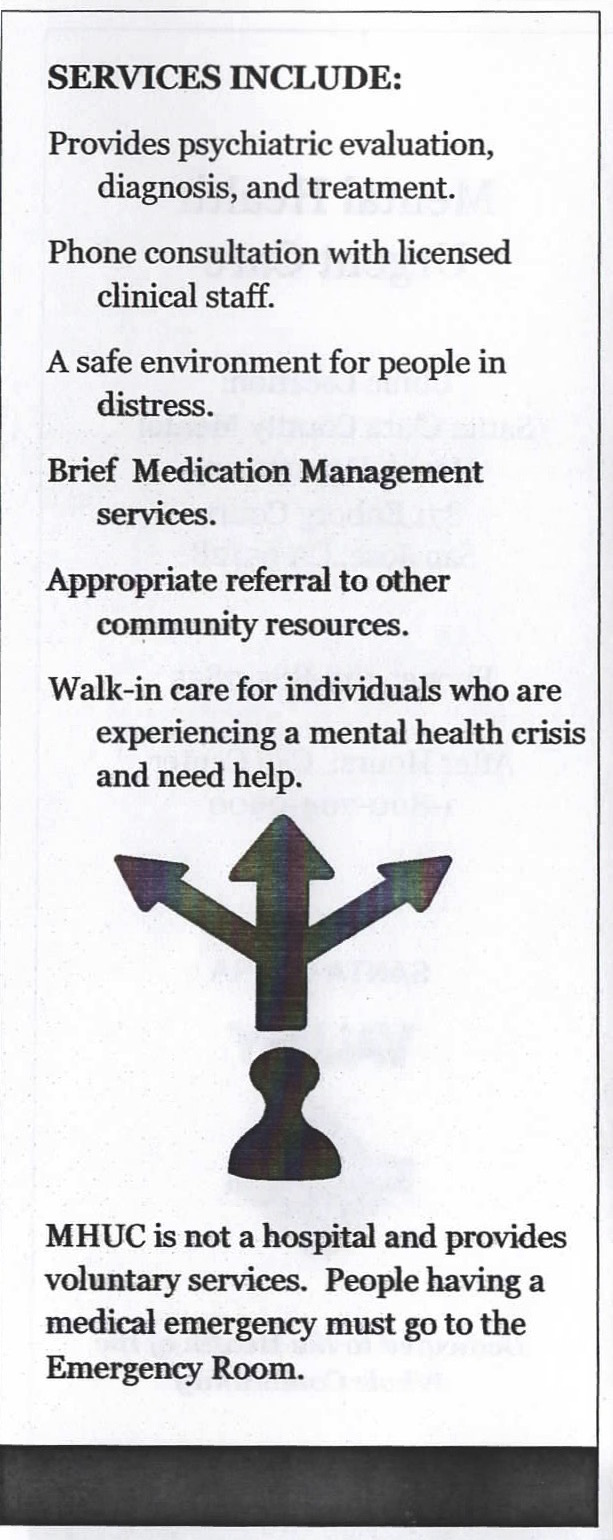
Primary Care Behavioral Health Services
Article Review: Raising Cain: The Problem of Family Homicides
Adequate psychiatric care. Clozapine is shown to reduce aggression, but under utilized in the U.S.
Assuring medications are being taken. A switch to injectables is likely to help in this area.
Assisted Outpatient Treatment (AOT in which the recipient in which an individual is required to follow his prescribed plan to live in the community has shown a reduction in violent, threatening and aggressive behavior.
Reform of HIPAA requirements which keep vital information from family members.
Focus on individuals with the most need. Prior warnings are usually given before homicides which include threats of harm and assaultiveness. Interpretation of laws regarding involuntary psychiatric hospitalization and treatment for these threats should not be interpreted narrowly.
Improved data collection to further study this problem would give a better idea of the prevalence. This would lead to better tools for assessing possible problems.
The author lastly claims that mental health stigma is incumbent on violent acts. This is because of media perception in the newspapers. Only by reducing these violent acts will stigma decrease.
Friday, December 9, 2016
Family and Children Services: Deaf and Hard of Hearing Program
Sunday, August 7, 2016
Medications for Mental Health
Each category includes specific medications. Of course each medication comes with benefits. Medications are taken to reduce symptoms, prevent relapse and improve quality of life. Successful medication treatment requires taking them as prescribed, take them at the same time each day, do not change you dose, follow instructions with regards to take with food or not, do not stop taking or reduce the dose without talking to your doctor. Report to your doctor and allergies you may have, if you are taking other drugs , including street drugs, are pregnant or breast-feeding, have diabetes, kidney liver or heart disease, are on a special diet, drink alcohol or smoke, experience side effects.